
8 Mailer Box Durability Secrets That Reduce Damages and Returns
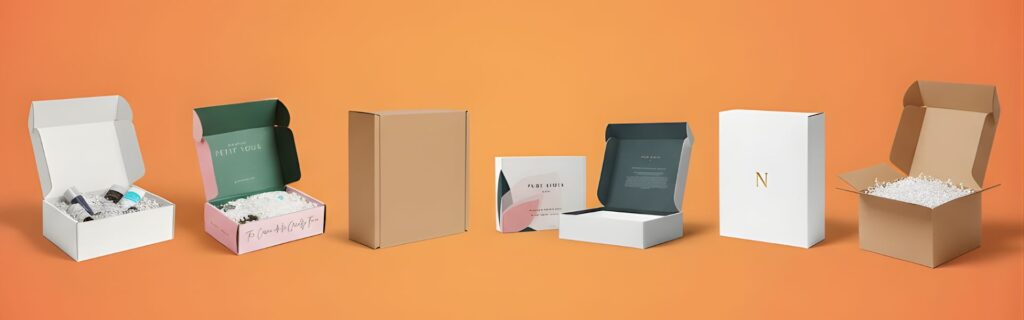
Product safety has never been as important as it is in today’s busy e-commerce protection life. Customers want products to arrive intact when they buy online. A small dent, rip, or broken fragment can destroy the excitement and the trust. That is where smart and tough mailer box designs come into the picture.
Good packaging protects your goods and reduces return orders. It costs less to ship, it increases customer satisfaction, and your brand image is improved.
Let’s discuss eight mailer box durability secrets that ensure your products arrive safely and customers smile.
1. Select the Right Material for Strength
Why Material Selection is Important
The quality of material at the bottom of your mailer box will decide whether it is strong or protective. If your paperboard or corrugated sheet is not very strong, it will not be able to handle longer shipping routes.
Best Mailer Box Materials
E-flute cardboard is most commonly used by all companies with different flute grades like E, B, or C.
E-flute: Very light and smooth, ideal for light-weight products.
B-flute: medium thickness, best for most of the mailer boxes.
C-flute: heavy thickness, heavy-duty, for fragile or heavy products.
While choosing, never ever compromise on weight, protection, and price. Thick material results in fewer damages while shipping.
Pro Tip:
For luxury or high-end products, you may use double-wall corrugated mailers. Double-wall gives additional cushioning and assists in resisting pressure while stacking and shipping.
2. Reinforce Edges and Corners
Weak Points in Mailer Boxes
It is where corner damage predominantly begins. They receive excessive pressure when being handled, stacked, and transported. They bend or tear easily without support.
Easy Ways to Make Them Stronger
Use corner braces or edge liners within the box.
Use fold-over flaps that lap for twice the strength.
Use additional glue or tape on corners to prevent splitting.
Design Tip:
Curved corners are less likely to crush than pointed tips. Experiment with curved corners in your mailer box for enhanced durability and a style-conscious look.
3. Choose the Right Box Size for Your Product
Why Fit Matters
A too-large or too-small box damages either of them.
Too large, and the item shakes around and gets damaged.
Too small, and there is pressure buildup that ruins the item or the box walls.
How to Get the Right Size
Always measure precisely — height, width, and depth. Then leave just enough space for padding or wrapping.
With custom-sized mailer boxes, there is a perfect fit. It also saves on material, lightens shipping weight, and provides a clean unboxing experience.
4. Add Cushioning Inside the Box
Why Cushioning Is Important
Even a very sturdy box needs internal protection. If a product jingles on arrival, the inner pack absorbs the shock and prevents impact damage.
Types of Cushioning Materials
- Kraft paper or tissue wraps: Environmentally friendly and pliable.
- Bubble wrap: Good for sensitive items like glass or electronics.
- Paper honeycomb packaging inserts: Lightweight yet durable protection.
- Molded pulp trays: Good for skincare or glass bottles.
Eco-Friendly Tip
Consumers today are fond of eco-friendly packaging. So, replace plastic inserts with recycled paper or biodegradable peanuts. They keep products safe and demonstrate your concern for the environment.
5. Apply Tear-Resistant Coatings and Finishes
What Are Protective Coatings?
Protective coatings form a protective layer on the box surface. Coatings make it scratch-proof, waterproof, and dust-proof. Coatings are a huge boon for mailer boxes to remain strong and good-looking during shipping.
Best Finishing Options
Aqueous coating: Provides water resistance and a glossy look.
UV coating: Resists fading of colors and prints.
Matte or gloss lamination: Supports the topmost layer and provides a luxurious feel.
Bonus Tip:
In the case of companies that export globally, moisture-proof coating can avoid warping or softening in damp climatic conditions.
6. Test Your Box Strength Before Mass Production
Why Testing Is Crucial
Even a tiny packaging defect can result in huge losses when mass shipping. That is where their professional testing comes in, before mass production.
Common Box Testing Methods
- Edge Crush Test (ECT): Tests the edges’ ability to withstand stress.
- Bursting Strength Test: Tests resistance to tears.
- Drop Test: Replicates actual shipping mishaps.
- Compression Test: Tests whether the box will not collapse when pressed with stacking pressure.
- Testing allows you to discover weak areas and refine the box design before shipping.
7. Optimize Box Design with Clever Engineering
Good Design Means Long Life
Strength is more than a material issue — it’s structural, too. Clever design decisions can dramatically improve the strength of mailer boxes without adding material expense.
Durable Mailer Box Designs
- Roll End Tuck Top (RETT): Simple to assemble and easy-to-close security.
- Lock Front Mailer: Flaps lock in and close the box.
- Self-locking Mailer: Tape-free, ideal for reusing and returns.
- Double Wall Tuck Front: Double wrapping for added strength and support.
Pro Tip:
Include internal dividers or inserts between multiple products to keep them apart in one box. This prevents products from colliding and keeps them organized when shipping.
8. Seal and Label Boxes Properly
The Last Step That Keeps It All Safe
Even a mailer box that is well-designed will fail if it is not properly sealed. If it is not sealed properly, it opens in transit and results in product loss or damage.
Sealing Secrets for Best Protection
Use only top-quality packing tape — water-activated tape or acrylic tape is good.
Seal all spaces in an H-pattern of closure for ultimate security.
Never use economy tape, as it de-sticks in heat or humidity.
Smart Labeling Helps Too
Add shipping labels to the top surface. Apply “Fragile,” “This Side Up,” or “Handle with Care” stickers when necessary. This ensures careful handling in transit.
Bonus Secret: Use Eco-Friendly But Durable Packaging
Sustainability with Strength
Strong custom packaging doesn’t have to kill the planet. There are a lot of eco-friendly packages with both strength and recyclability nowadays.
Utilize Kraft mailer boxes made of recycled cardboard. They are strong, reusable, and provide a natural look to your company.
Adding soy-based inks and water-based coatings makes your packaging fully biodegradable.
Customer Connection
If customers see sustainable yet robust packaging, they trust your brand more. It is a sign of responsibility and care, on their part as well as the world’s.
Common Errors That Reduce Mailer Box Strength
Sometimes brands inadvertently lower box strength by:
- Choosing thin or low-quality cardboard.
- Ignoring proper sealing processes.
- Overlooking quality checks.
- Overloading boxes beyond limits.
- Using a weak internal filling material.
These errors avoided result in reduced return and easier shipping.
Benefits of Heavy-Duty Mailer Boxes
For Your Business:
Reduced return and replacement cost.
Enhanced brand credibility.
Less material loss and damage.
Fewer shipping and storage problems.
For Consumers:
Clean, secure deliveries.
Increased confidence in your brand.
Heavy-duty mailer boxes convert one-time buyers into repeat customers — the finest return any business can hope for.
Final Thoughts
Solidly designed mailer boxes safeguard your product, establish trust, and save money. Whether you are shipping skincare, books, candles, or tech electronics, durability counts.
Through these eight secrets to mailer box endurance, damage is minimized, returns are minimized, and each time is a better-quality experience.
Each box you ship is not merely packaging — it’s a promise of quality and care.
Commonly Asked Questions (FAQs) related to Mailer Box Durability Secrets
Q 1. What is the best material for heavy-duty mailer boxes?
Corrugated cardboard with B or C flute provides superior strength and flexibility.
Q 2. How can I design my mailer box to be durable and eco-friendly?
Use recycled kraft paper, water-based coatings, and biodegradable cushioning for protection and sustainability.
Q 3. How can I ensure my mailer box is not damaged during transit?
Use double-wall constructions, include inner supports, and select the optimal box size.
Q 4. Are custom-sized mailer boxes a worthwhile investment?
Yes, they minimize motion, stop damage, and provide an upscale unboxing experience.
Q 5. Why are corners so likely to get easily damaged?
Because they concentrate the most stress during stacking and shipping, always support them.
Q 6. Can mailer boxes be branded for marketing purposes?
Yes, you can print your logo, slogan, and colors on mailer boxes to enhance brand recognition and customer engagement.
Q 7. What is the difference between a mailer box and a shipping box?
Mailer boxes are designed for presentation and protection, while shipping boxes are meant for bulk transport and heavier loads.
Q 8. How do I choose the right size for my mailer box?
Measure your product’s length, width, and height carefully, then add 1–2 inches of space for protective cushioning. This ensures the product fits securely without shifting during transit.
Q 9. Are mailer boxes reusable or recyclable?
Yes, most kraft and corrugated mailer boxes are made from eco-friendly materials. They can be reused for storage or shipping and are fully recyclable, reducing environmental waste.
Q 10. What printing techniques work best for mailer boxes?
Offset, flexographic, and digital printing offer high-quality, long-lasting graphics. These methods make your packaging look professional while keeping your brand colors vibrant and consistent.